About a Project

Avodah Med is a clinical platform designed to streamline appointment documentation, improve clinician efficiency, and ensure structured, compliant medical data output. The platform was built with direct input from providers and optimized for HIPAA compliance, accessibility, and ease of use across desktop and mobile.

Outcomes

  • Successfully launched cross-platform app (iOS & Android)

  • Achieved 99% crash-free sessions in the first 60 days

  • Created a scalable mobile UX library for future projects

Problem Statement

My Role

Clinicians were documenting patient interactions in large, unstructured text blocks. This caused:

  • Increased documentation time

  • Inconsistent records

  • Difficulties with data retrieval and billing

As a hands-on director of UX & Design, Led product design, UX research, design systems, and worked closely with product and engineering teams to bring the vision to life. I also oversaw the mobile design strategy and collaborated directly with our clinical advisors.

Project Goal

Transform unstructured appointment notes into structured, discrete fields that:

  • Align with SOAP and clinical workflows

  • Enable dynamic validation and autofill with AI

  • Improve documentation quality and billing readiness

Constraints

  • HIPAA & CMS compliance

  • AI-tech constrains

  • Legacy data model dependencies

  • Mixed user base: new and tech-savvy clinicians

Research & Personas

About a user adipiscing elit. Ut elit tellus, luctus nec ullamcorper mattis, pulvinar dapibus leo.

Persona Snapshot
  • Dr. Maria J., Internal Medicine
    Needs: Speed, accuracy, familiarity
    Frustrations: Overloaded fields, manual data entry, error-prone workflows
    Goals: Document quickly and bill accurately

We conducted:
  • 8 user interviews with clinicians (MDs, PAs, RNs)

  • Competitive analysis of similar documentation tools

  • Heuristic evaluations of existing documentation systems

Wireframes & Iteration

Initial concepts were designed in low-fidelity and tested across four rounds:

  • Round 1: Flat layout with labels only

  • Round 2: Added field grouping and section titles

  • Round 3: Inline hints and tooltips

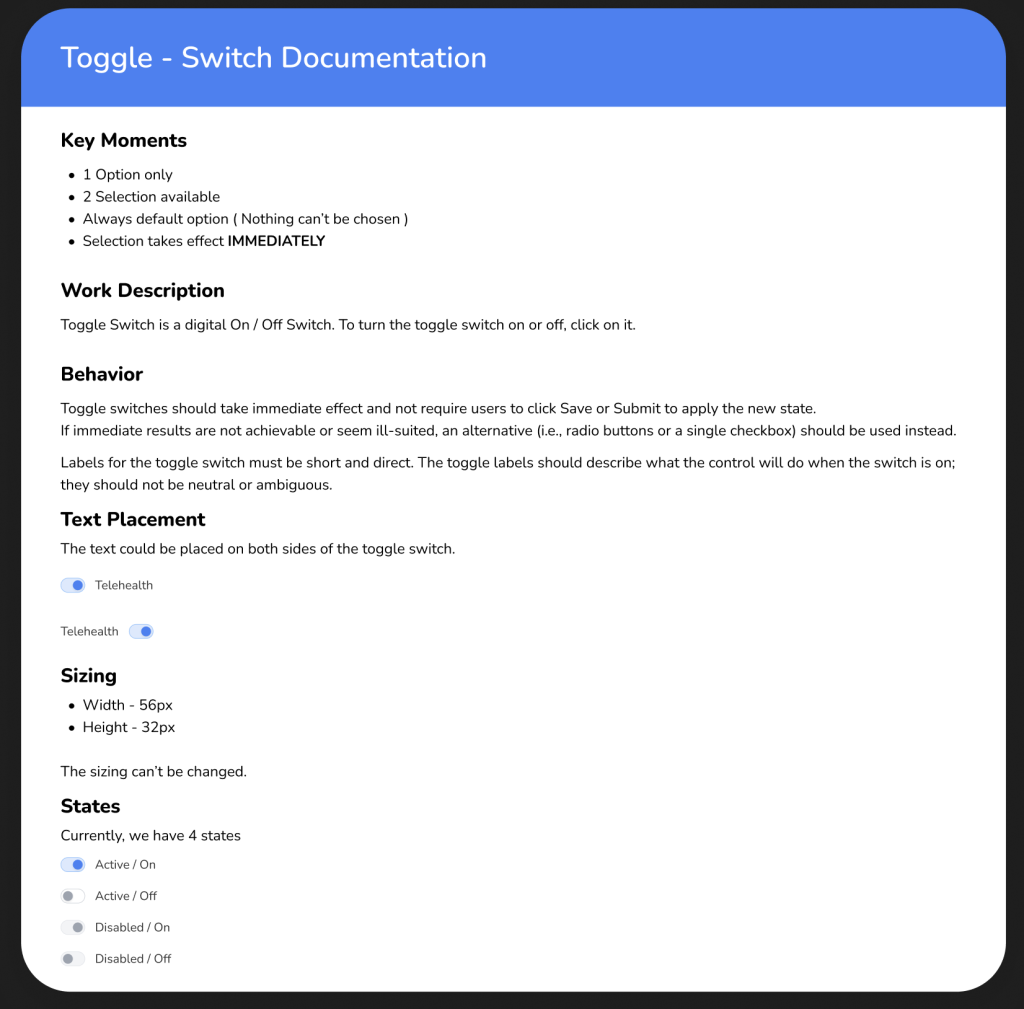
  • Round 4: Toggle between structured/free-text modes

Changes were made after observing field fatigue and misinterpretation during usability testing.

Design System

  • Built atomic components in Figma using auto layout and variants

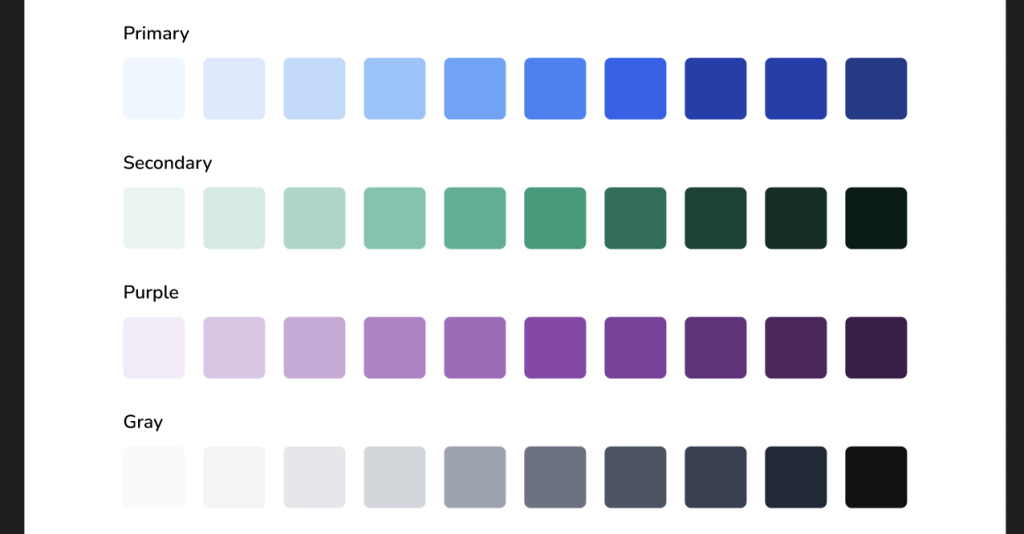
  • Created color and type tokens for WCAG AA compliance

  • Defined spacing, elevation, and reusable templates for consistency

One of the features: Discrete Fields — Structuring Clinical Data

Shortly Describe the problem

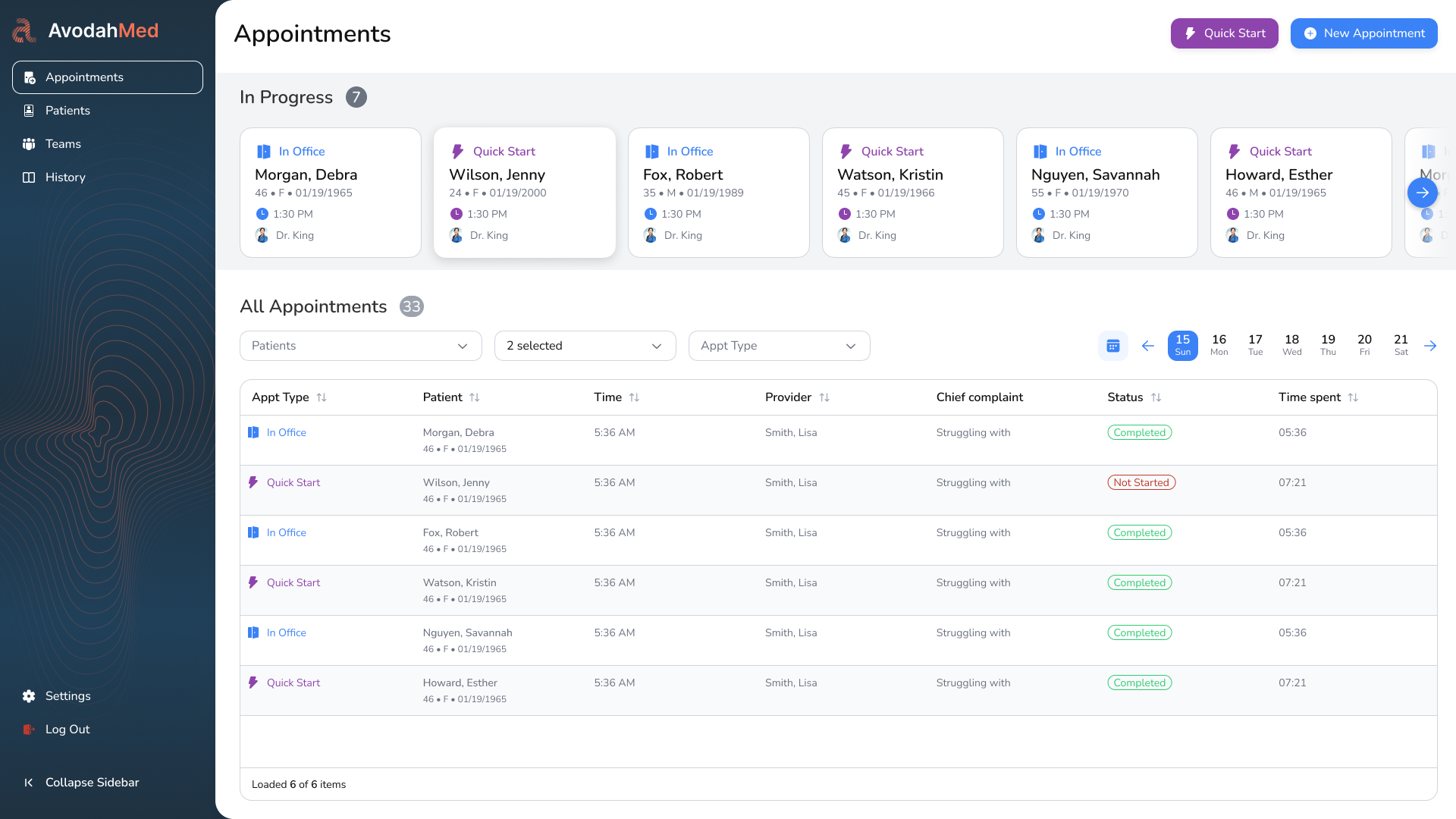
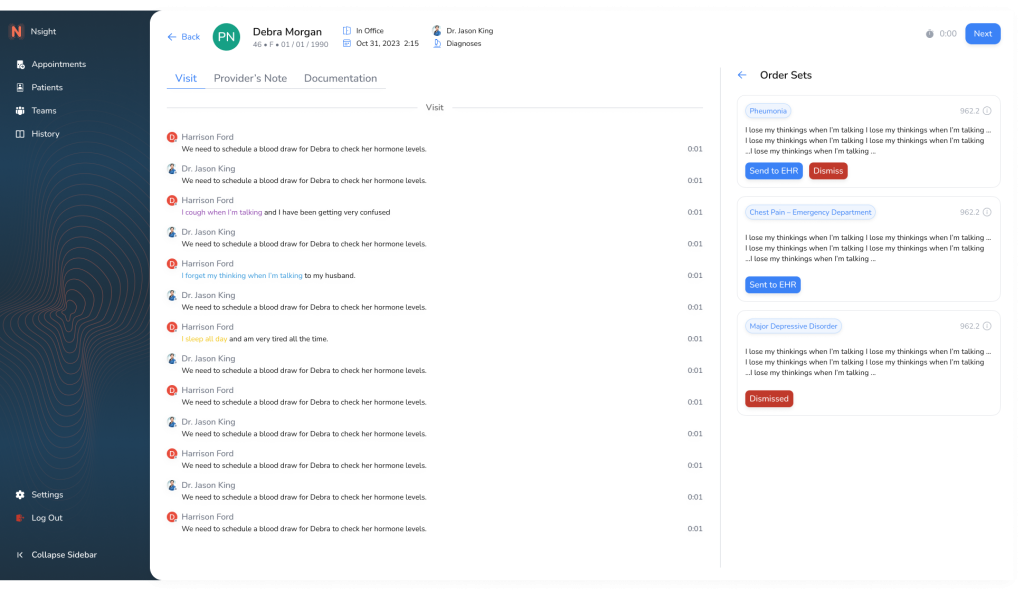
Screen 1: Baseline

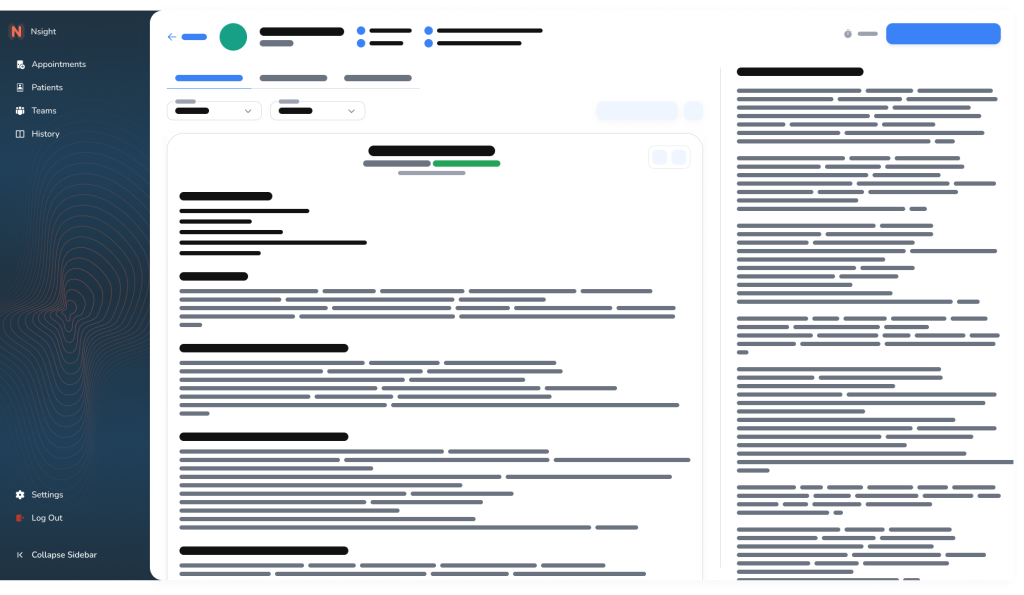
The original screen displayed appointment notes in a flat list format with minimal context. Clinicians had to scroll through repetitive entries and lacked insight into documentation completeness. Data was not actionable.

Pain Point: No visibility into what needs attention. High cognitive load.

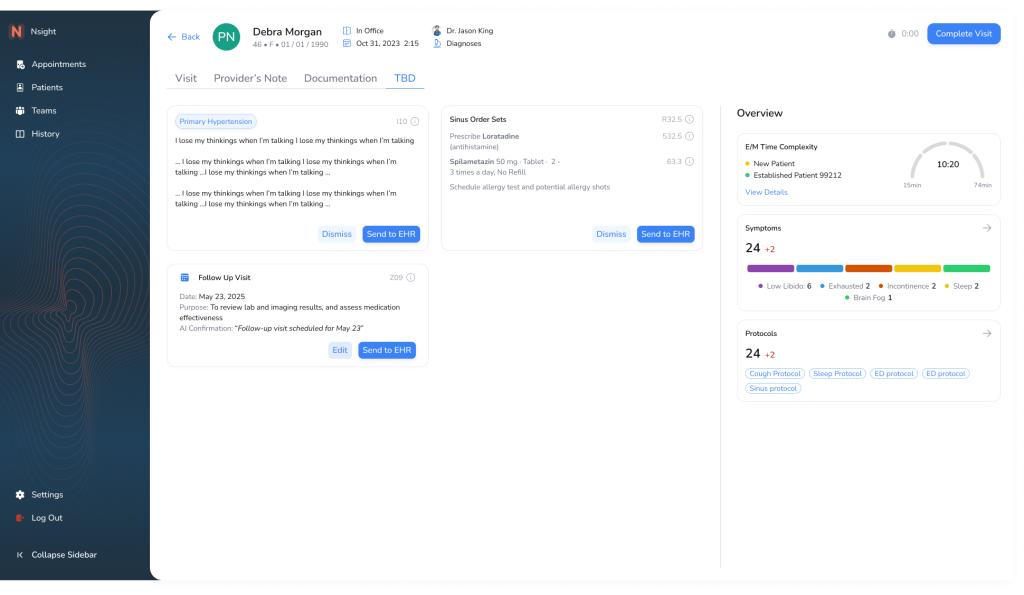
Screen 2: Visual Prioritization

Introduced visual indicators (color-coded chips and completion bars) to surface documentation status at a glance. Added side panel with quick documentation preview.

Improvement: Better prioritization. Clinicians can triage and batch-document faster.

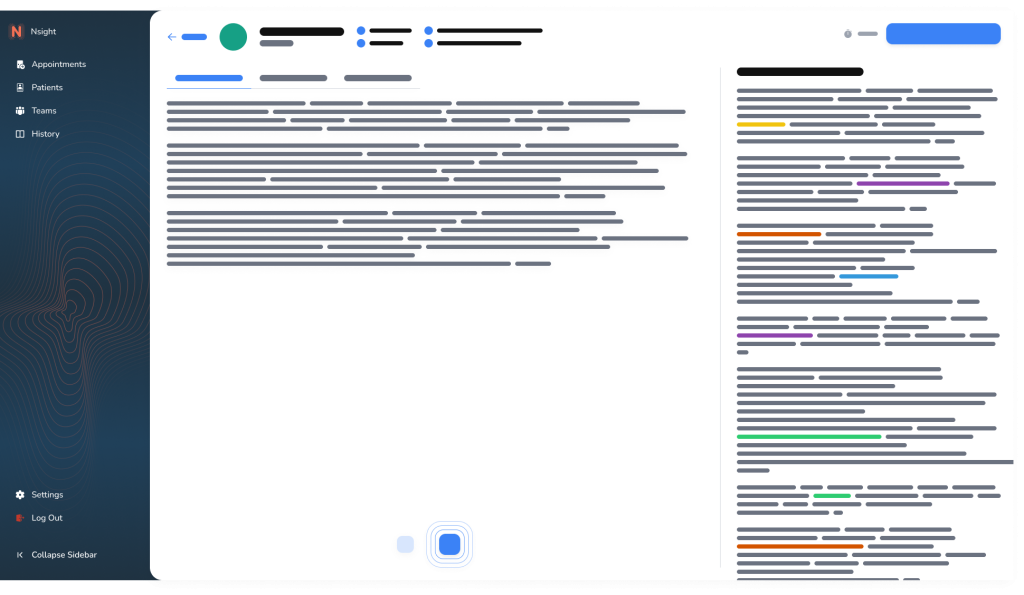
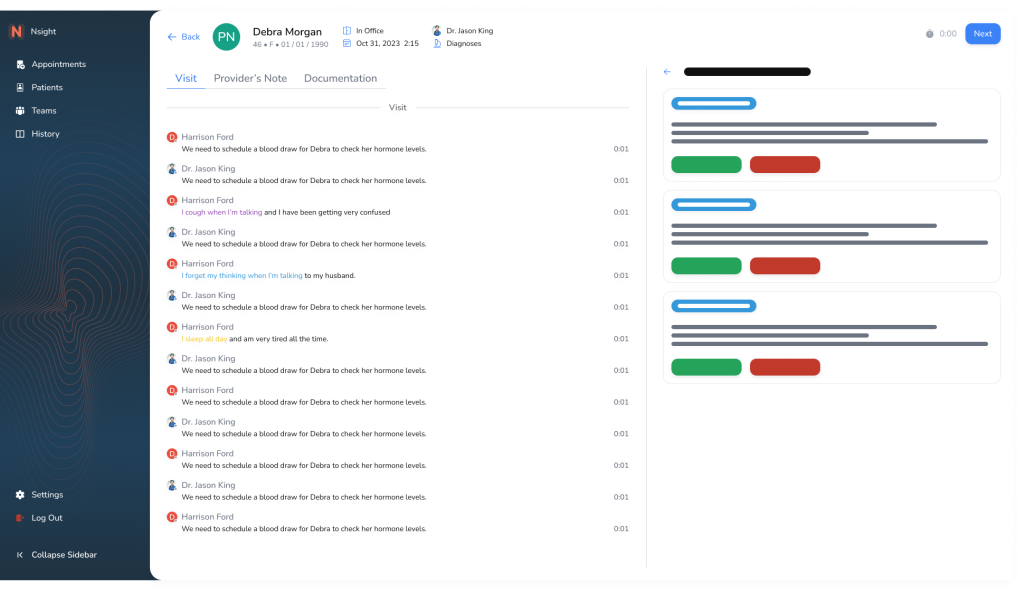
Screen 3: Contextual Guidance

Replaced passive preview panel with actionable fields. Added summaries, history, and visual progress gauge. Moved from passive reading to interactive editing.

Improvement: Enabled quick entry of key details. Reduced screen-switching.

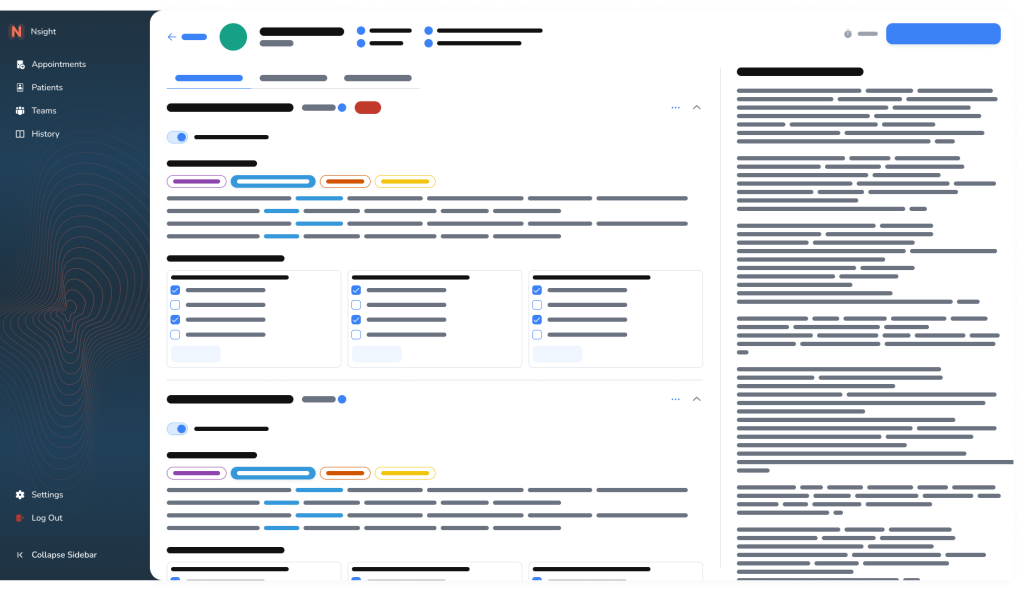
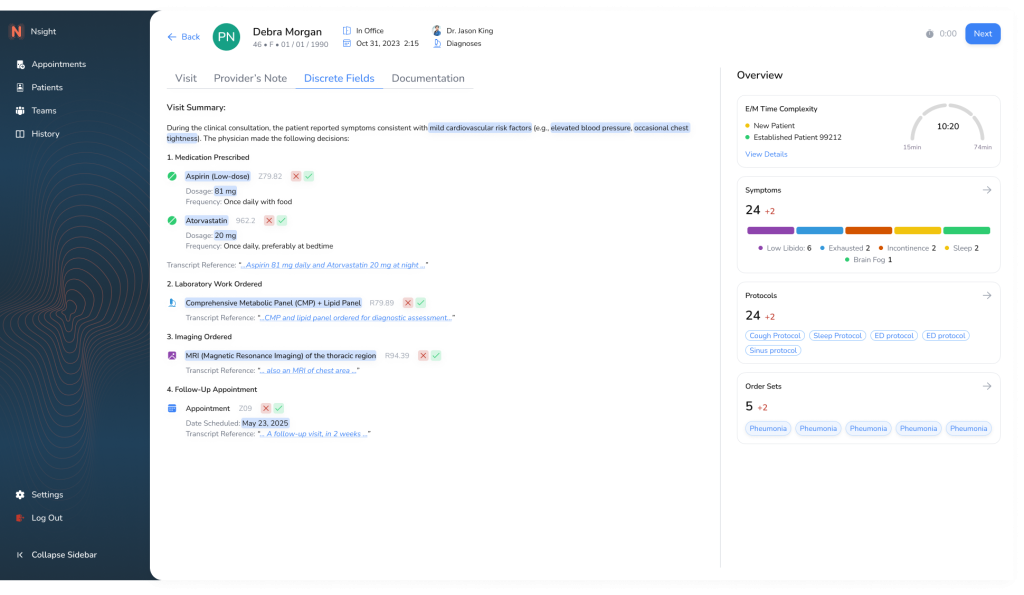
Screen 4: Embedded Structure

Structured fields now embedded directly in the interface. Smart defaults, validation, and tags support accurate input. Data now cleanly maps to EHR.

Improvement: Improved data quality and speed. Enabled future automation and scalability.

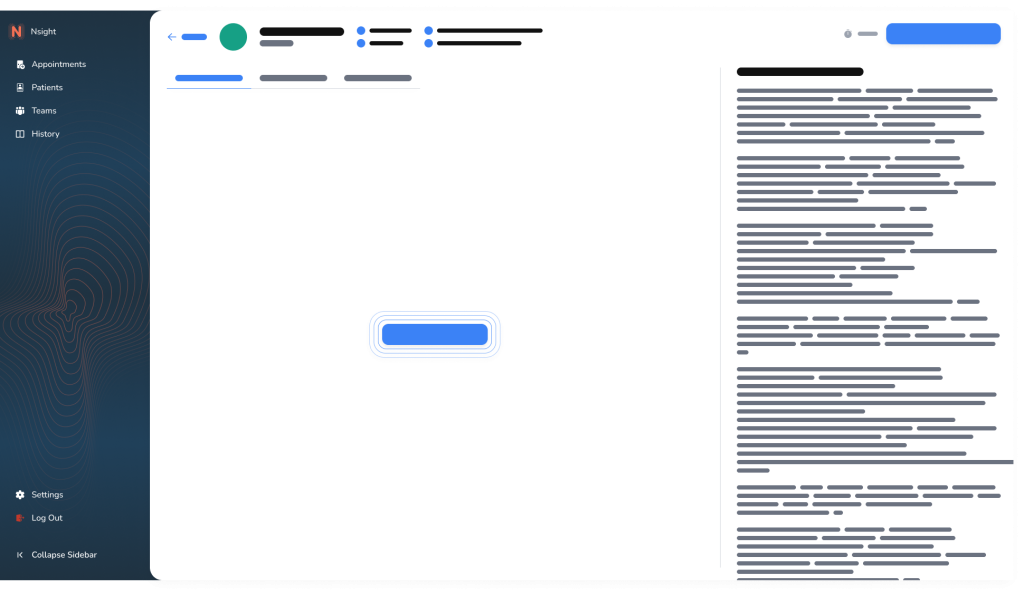
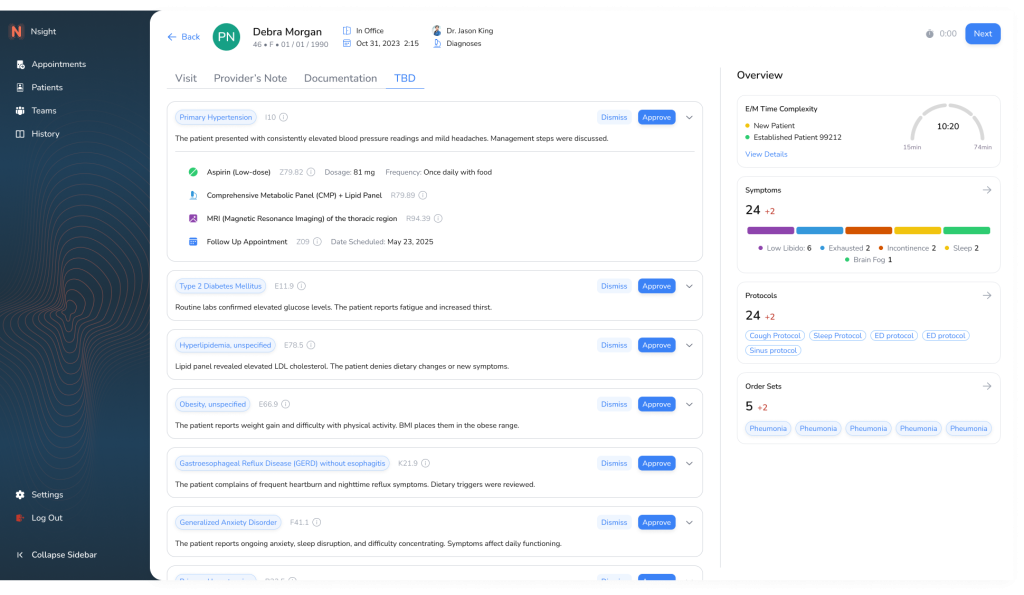
Screen 5: Final UX — Role-Tailored & Modular

Final iteration includes collapsible sections, saved state indicators, and user-role conditional fields. Optimized for tab-based navigation and fast-entry workflows.

Improvement: Clinicians document faster with fewer clicks. Data is reusable, clean, and export-ready.