About a Project

This internal tool was built to support data scientists and machine learning engineers working on custom clinical AI models. It enables fast experimentation, model fine-tuning, and comparison by combining ambient transcription inputs with chat-based interactions and structured clinical note generation.

The platform brings together transcript uploads, AI outputs, prompt testing, and document generation in one streamlined interface.

The Challenge

  • Design a system that would allow internal AI teams to:

    • Upload large transcription datasets for model input

    • Interact with models using natural language prompts and medical context

    • View model outputs as structured notes (SOAP, clinical summaries, referrals)

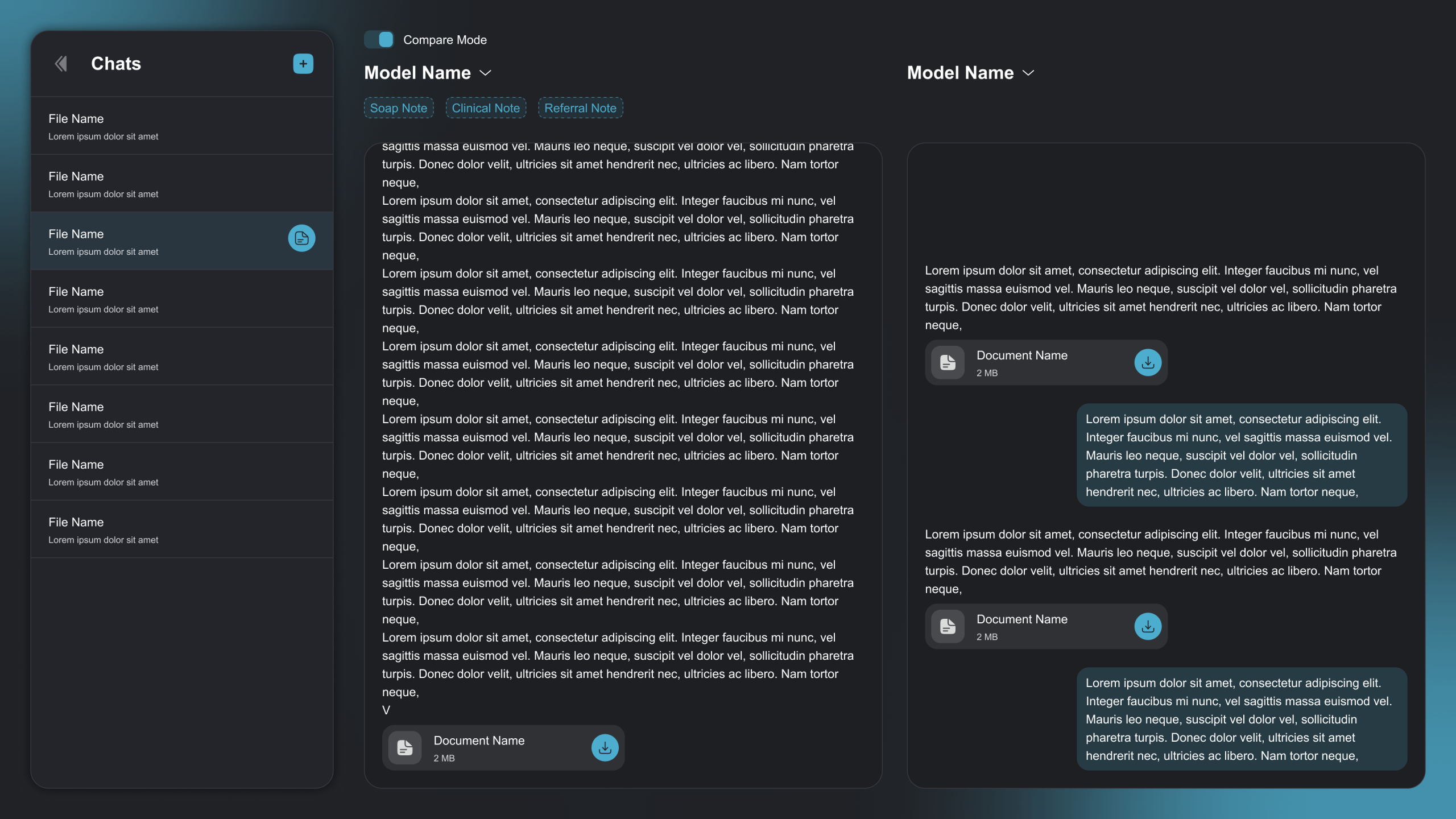
    • Compare output across model versions and prompt variations

    • Enable rapid iteration and model performance tuning in real-world clinical formats

Key Features

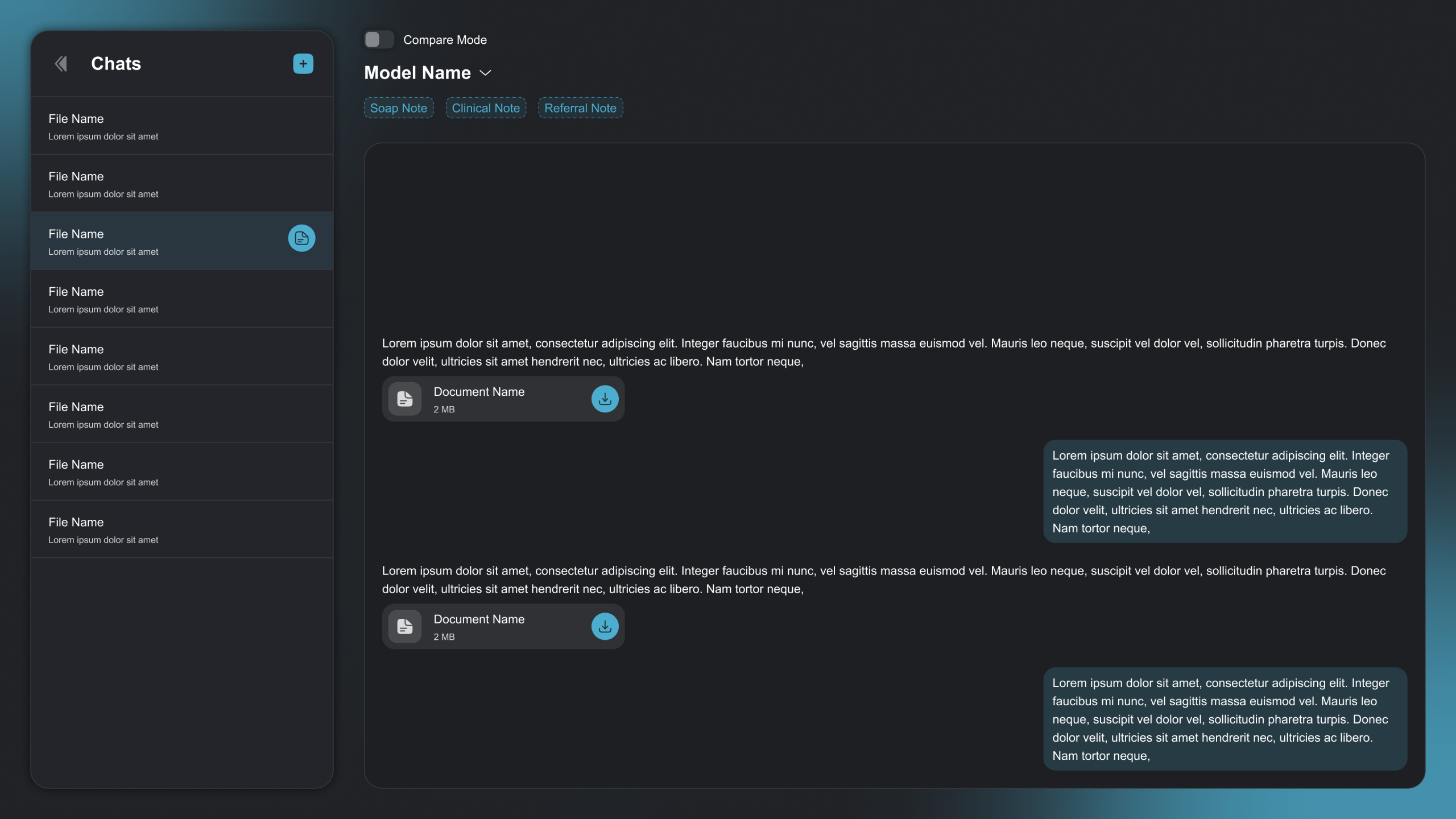
  • Transcript Upload & Context Preservation – Designed for 2MB+ files, preserving medical context throughout prompt-response iterations

  • Chat Interface for Prompt Engineering – Allows iterative dialogue with fine-tuned LLMs for testing output reliability

  • Note-Type Toggle – One-click switching between SOAP, Clinical Note, and Referral Note output formats

  • Side-by-Side Compare Mode – Built for validating changes between prompt versions or model iterations

🖥️ UX & UI Highlights

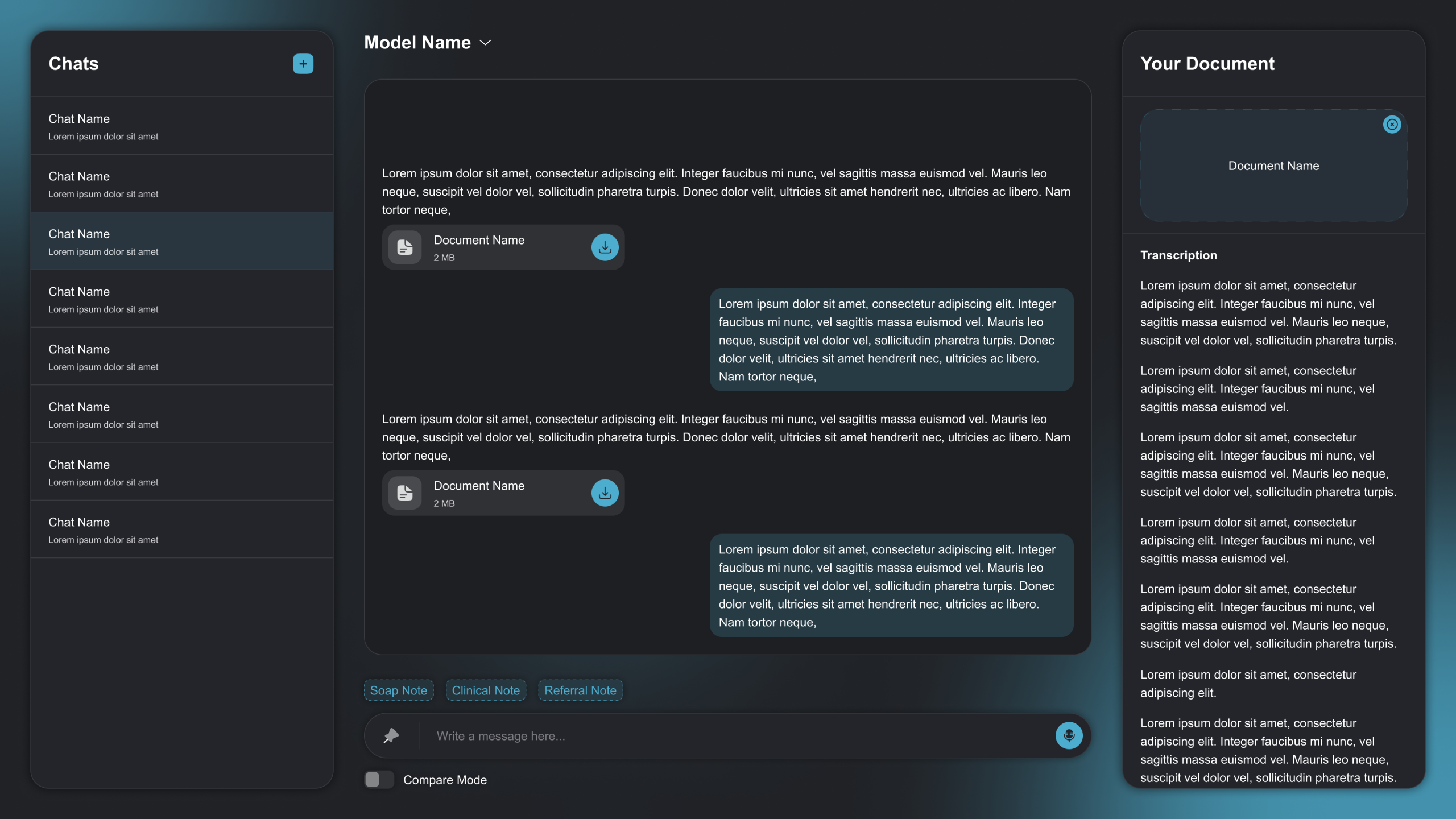
  • Left Panel: Conversation index for organized model runs

  • Center Workspace: Chat + upload stream showing live input/output flow

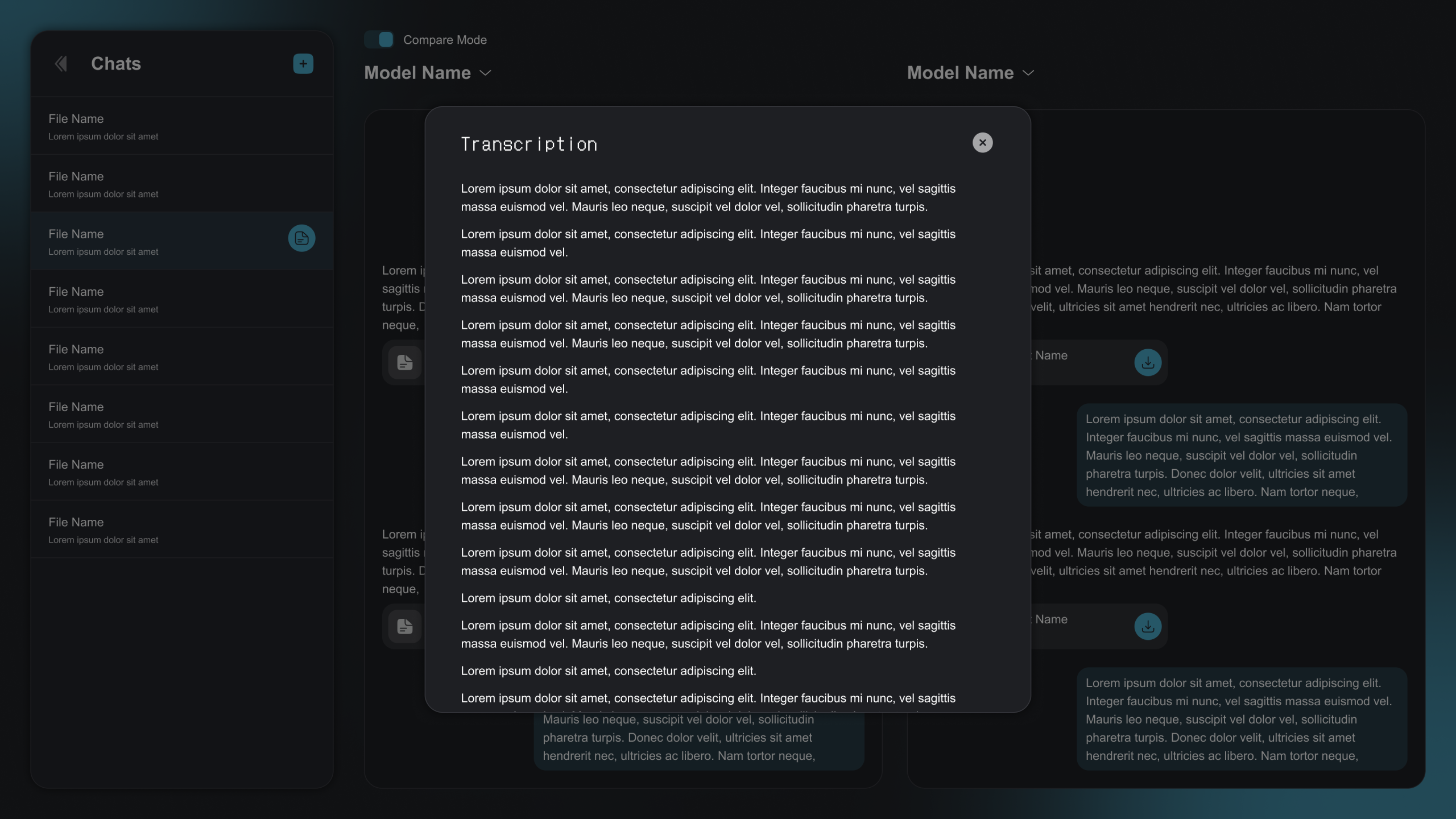
  • Right Panel: Real-time document viewer with generated transcription and notes

  • Dark Theme UI: Purpose-built for extended sessions, reducing visual fatigue

  • Clear iconography and progressive disclosure for low-friction navigation

🔬 Product & UX Outcomes

  • Empowered internal teams to test AI model variants faster

  • Created a shared space for prompt engineers and clinical SMEs to validate results

  • Structured MVP with clear epics and user stories focused on iteration speed and usability

  • Reduced time-to-feedback on model fine-tuning from days to minutes

🧪 Clinical-AI Alignment

The design bridges technical workflows with clinical usability by presenting AI output in familiar formats—helping internal teams validate outputs as real, chart-ready notes.